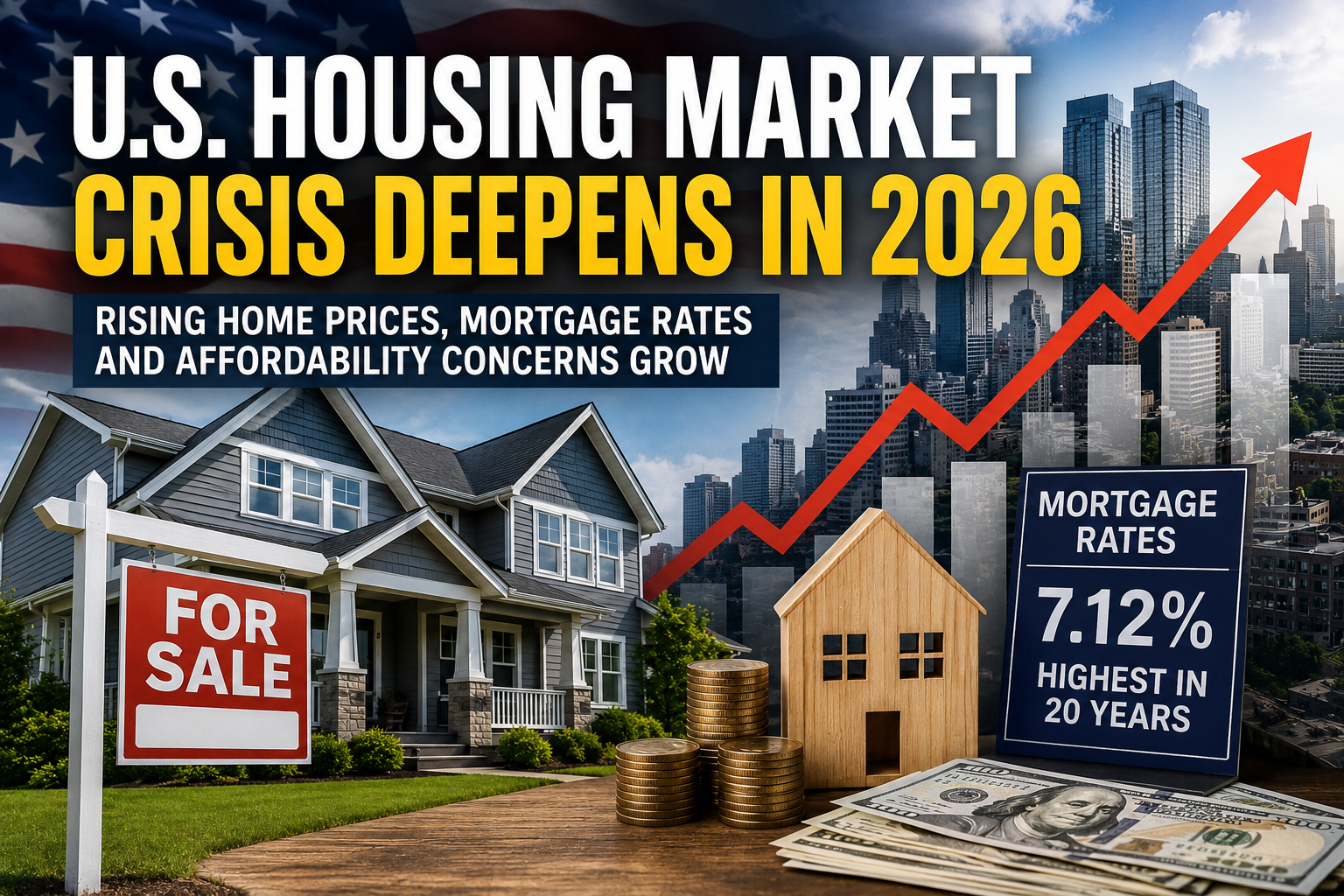
The United States housing market is facing one of its toughest periods in decades as home prices remain high and mortgage rates continue climbing throughout 2026.
Millions of Americans are struggling to buy homes as affordability reaches historic lows in several major cities. Experts warn that rising interest rates, inflation, and limited housing supply are creating a serious challenge for middle-class families across the country.
Economists now believe the housing sector could become one of the biggest political and economic issues in the United States this year.
Home Prices Continue Breaking Records
Housing prices across America have continued rising despite slower economic growth. Major cities including New York, Los Angeles, Miami, and Austin are seeing property values remain near record highs.
According to market analysts, the average cost of a home in many urban areas has increased dramatically compared to previous years. Many first-time buyers are now unable to qualify for loans because monthly mortgage payments have become too expensive.
Real estate experts say one major reason behind rising prices is the shortage of available homes. Builders are struggling with high construction costs, labor shortages, and supply chain issues, limiting new housing projects.
Why Are Homes So Expensive?
Several factors are pushing housing prices higher in the United States:
- High mortgage interest rates
- Low housing inventory
- Rising construction material costs
- Population growth in major cities
- Increased demand from investors
Analysts say these issues combined are making the American dream of homeownership harder for younger generations.
Mortgage Rates Reach Multi-Year Highs
Mortgage rates in 2026 remain one of the biggest concerns for buyers. Interest rates have stayed elevated after the Federal Reserve continued efforts to control inflation.
For many Americans, even small increases in mortgage rates can add hundreds of dollars to monthly payments.
Financial experts explain that higher borrowing costs reduce purchasing power, meaning families can afford smaller homes despite paying more money overall.
Impact on Middle-Class Families
Middle-income households are feeling the strongest pressure from the housing market slowdown. Many families who planned to buy homes are now delaying purchases or continuing to rent due to high prices.
Rent costs are also increasing in many states, creating additional financial pressure for millions of people.
Some housing advocates warn that affordability problems may increase homelessness and widen wealth inequality in the country if long-term solutions are not introduced.
Rental Market Also Under Pressure
The rental market in the United States has become increasingly competitive in 2026. In many cities, apartment rents continue rising because demand remains strong while supply stays limited.
Young professionals and students are particularly affected as landlords raise prices to match inflation and market demand.
Experts say some Americans are now moving away from expensive cities and choosing smaller towns with lower living costs. This migration trend is changing real estate markets across multiple states.
Cities Seeing Major Population Changes
Several large cities are experiencing shifts in population patterns due to housing costs:
- New York City
- San Francisco
- Los Angeles
- Chicago
- Seattle
Meanwhile, more affordable regions in Texas, Florida, and parts of the Midwest are attracting new residents looking for cheaper housing options.
Government Faces Pressure to Act
The Biden and Trump administrations have both faced criticism over housing affordability in recent years. Lawmakers from both political parties are now debating new policies aimed at helping buyers and renters.
Some proposals include:
- Expanding affordable housing programs
- Offering tax credits for first-time homebuyers
- Lowering construction regulations
- Increasing federal housing assistance
- Supporting low-interest loan programs
However, economists warn that solving America’s housing crisis could take years because supply shortages cannot be fixed quickly.
Experts Fear Economic Risks Ahead
Housing plays a major role in the American economy. When home sales slow down, industries connected to real estate — including banking, construction, furniture, and retail — can also suffer.
Some financial analysts worry that prolonged weakness in housing could reduce consumer spending and slow economic growth nationwide.
Others believe the market may eventually stabilize if inflation falls and interest rates decrease later this year.
Will Housing Prices Crash?
Despite affordability concerns, many experts do not expect a major housing market crash similar to 2008.
Unlike the financial crisis years, banks today have stricter lending standards, and homeowners generally hold stronger financial positions.
Instead, analysts predict a gradual market correction where prices may slow or slightly decline in some regions while remaining stable in others.
Technology Is Changing Real Estate
Artificial intelligence and digital platforms are also transforming the U.S. housing market. Many real estate companies now use AI tools for property pricing, virtual tours, and customer support.
Online mortgage approval systems and digital property marketplaces are making home-buying processes faster than before.
However, critics argue that large investment firms using advanced technology are buying too many homes, reducing opportunities for ordinary families.
What Happens Next?
The future of America’s housing market depends heavily on inflation trends, Federal Reserve policies, and economic growth during the rest of 2026.
If mortgage rates begin falling, more buyers could return to the market. But if inflation remains high, affordability problems may continue worsening.
For millions of Americans, housing remains one of the most important financial challenges they face today.
FAQ Section
Why are U.S. home prices still rising in 2026?
Limited housing supply, strong demand, and high construction costs are keeping prices elevated.
Are mortgage rates expected to fall?
Some experts believe rates could decline later in 2026 if inflation slows down.
Which U.S. cities are most expensive to buy homes?
Cities like New York, Los Angeles, San Francisco, and Miami remain among the most expensive housing markets.
Is the U.S. housing market going to crash?
Most economists do not expect a major crash like 2008, but some regional price corrections are possible.