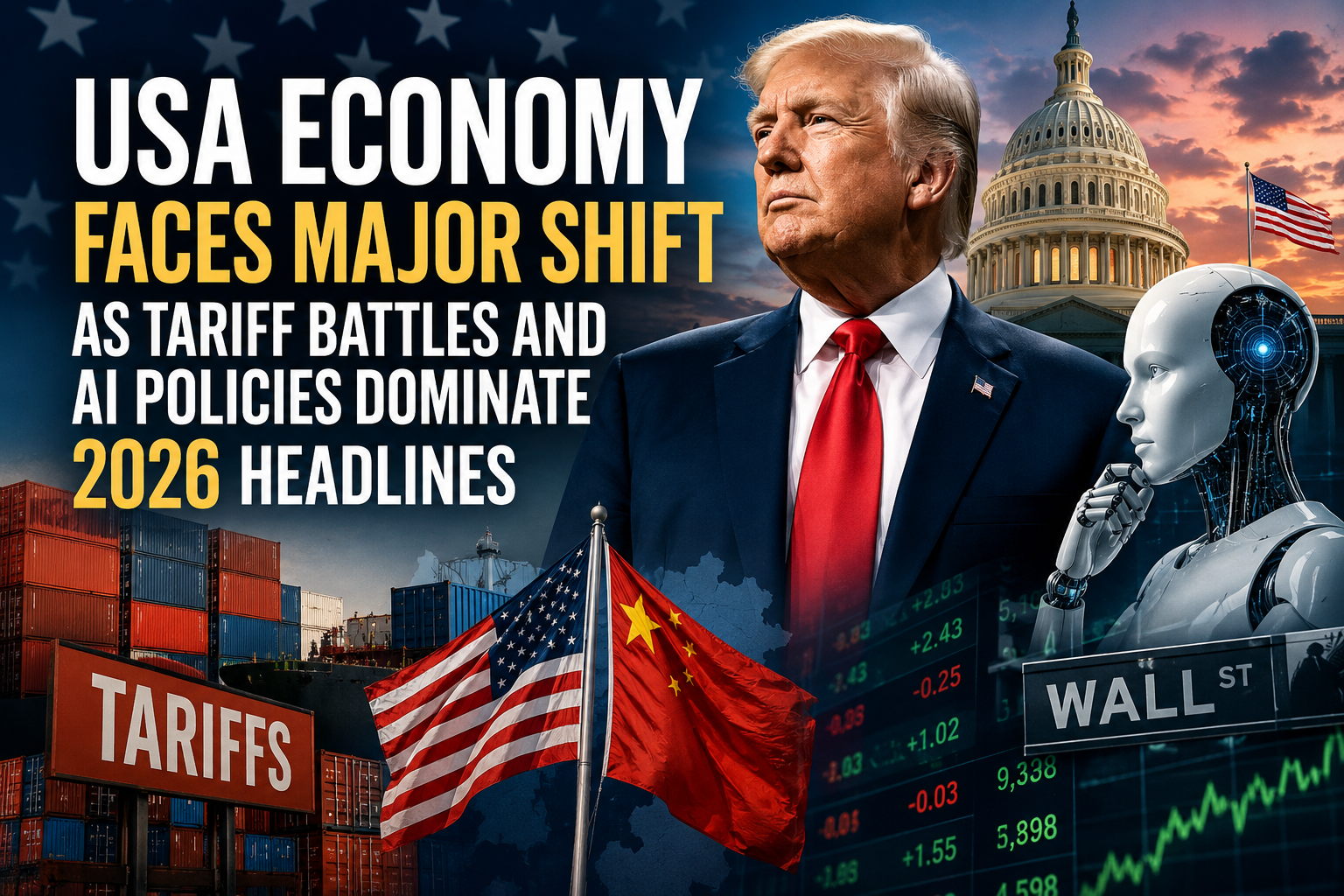
America Enters a New Economic Era in 2026
The United States is witnessing one of the most dramatic economic and political shifts in recent years. From controversial tariff rulings to new artificial intelligence regulations, 2026 has become a defining year for America’s economic future.
President Donald Trump continues to push aggressive trade policies while courts and lawmakers debate the limits of presidential power. At the same time, artificial intelligence is rapidly changing industries, creating both opportunities and fears for millions of American workers.
Experts believe these developments could reshape the U.S. economy for years to come.
U.S. Courts Challenge Trump’s Tariff Policies
One of the biggest stories in the United States this year is the growing legal battle over import tariffs. Recently, a federal trade court ruled against several major tariffs introduced by the Trump administration, calling parts of the policy unlawful.
The court stated that the president exceeded legal authority by imposing broad import taxes without direct approval from Congress. The decision has created uncertainty for businesses, investors, and international trade partners.
Economists say the ruling could weaken future presidential control over trade policies. However, the White House is expected to appeal the decision and may introduce new tariffs under different trade laws.
Why Tariffs Matter
Tariffs are taxes placed on imported goods. Supporters argue they protect American manufacturing and create local jobs. Critics believe they increase prices for consumers and hurt international trade relationships.
The United States has already faced rising tensions with several countries including China and members of the European Union over trade policies.
AI Regulation Becomes a National Priority
Artificial intelligence is now at the center of American policy discussions. The White House recently began reviewing stronger AI regulations after experts warned about cybersecurity risks and misuse of advanced AI systems.
Government officials fear that highly advanced AI models could expose sensitive software vulnerabilities and national security weaknesses. Reports suggest the administration may create a new approval system for powerful AI technologies similar to how medicines are reviewed before public use.
The debate has divided technology leaders across the country. Some companies believe strict regulations could slow innovation, while others argue safety controls are necessary before AI becomes even more powerful.
AI and Job Loss Concerns
Artificial intelligence is also changing the American workforce. Several large U.S. companies announced layoffs in 2026, with many businesses replacing traditional roles through automation and AI systems.
Industries such as customer service, finance, logistics, and software development are seeing rapid transformation. Analysts warn that white-collar workers could face increasing competition from automated tools over the next decade.
Despite these concerns, AI investment remains extremely high. Major tech companies continue spending billions on AI infrastructure and data centers to compete in the global market.
Global Trade Tensions Continue to Rise
Trade tensions between the United States and China remain a major international issue in 2026. Both countries are trying to stabilize economic relations while protecting their own industries and political interests.
Analysts believe upcoming diplomatic meetings between American and Chinese leaders could determine the future direction of global markets.
Meanwhile, negotiations between the United States and Europe have also become difficult after new tariff threats on European automobiles. European officials say progress is being made, but disagreements remain unresolved.
The global economy is now closely watching Washington’s next moves because U.S. trade policies heavily influence worldwide supply chains and international business activity.
Experts Warn About Economic Uncertainty
Several financial organizations have warned that protectionist policies and market instability may slow economic growth in the coming months. Researchers say aggressive tariffs and global political tensions could increase inflation and reduce investment confidence.
At the same time, supporters of the administration believe strong trade measures are necessary to protect American industries from unfair foreign competition.
The debate reflects a larger national question: should America prioritize global free trade or focus more on domestic economic protection?
What Happens Next?
The next few months are expected to be critical for the United States economy. Court appeals, AI legislation, and international trade negotiations could all significantly impact markets and businesses.
Experts believe the combination of AI expansion, trade disputes, and political uncertainty makes 2026 one of the most important economic years in recent American history.
For millions of Americans, the outcome of these decisions may influence jobs, prices, investments, and the overall future of the country’s economy.
FAQ Section
Why are U.S. tariffs making headlines in 2026?
Federal courts recently ruled against some of President Trump’s tariffs, creating major political and economic debate across the country.
How is AI affecting the U.S. economy?
Artificial intelligence is transforming industries, increasing automation, and causing concerns about job losses and cybersecurity risks.
Is the U.S. economy slowing down?
Experts say uncertainty from tariffs, inflation, and global trade tensions could affect economic growth in 2026.
Why are U.S.-China relations important?
The United States and China are the world’s largest economies, and their trade relationship impacts global markets and supply chains.